|
JIM HAYNES |
Previous Page  
|
ANDREW RADKOWSKY
|
|||
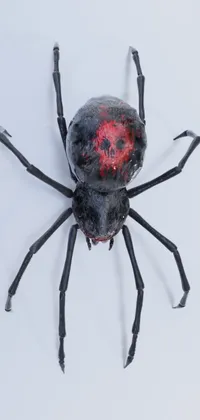
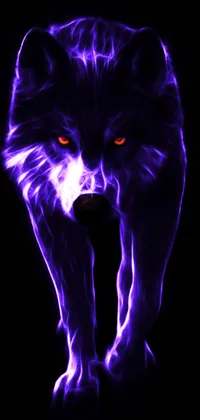
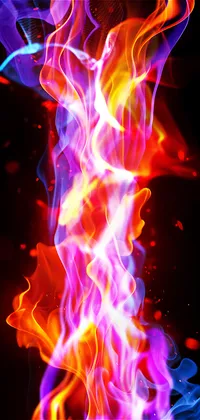
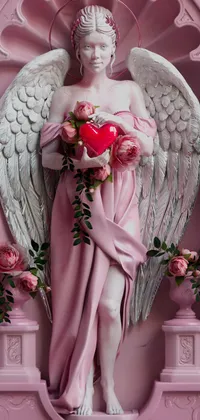
![]() ![]() colour pencils on paper, 29 x 21 cm, 2011 |
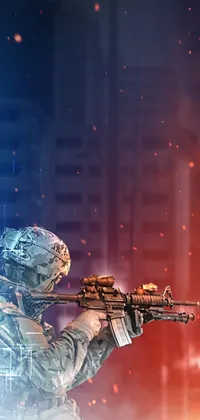
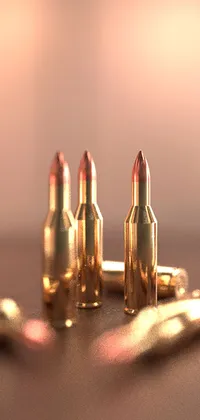
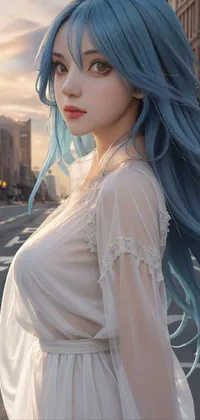
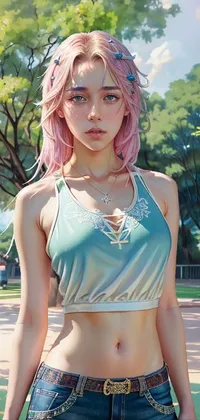
![]() ![]() colour pencils on paper, 20 x 40 cm, 2011 |
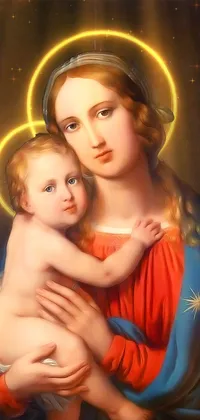
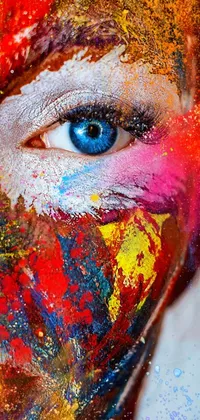
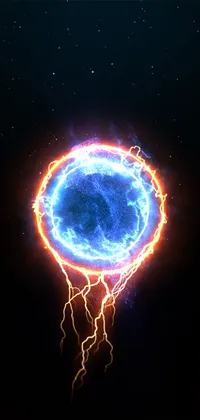
![]() ![]() colour pencils on paper, 15 x 19 cm, 2011 |
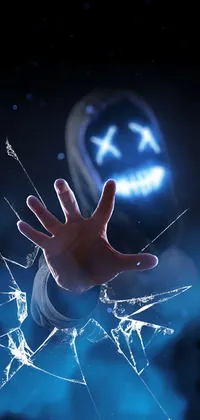
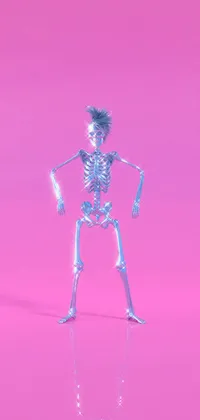
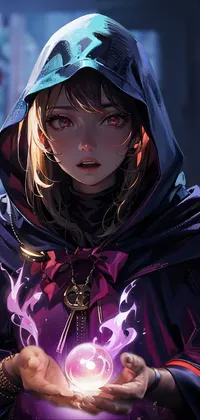
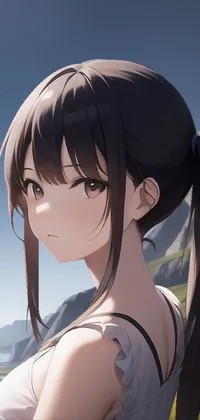
![]() ![]() colour pencils on paper, 29 x 21 cm, 2011 |
|
colour pencils on paper
29 x 21 cm, 2011 |
colour pencils on paper
20 x 40 cm, 2011 |
colour pencils on paper
15 x 19 cm, 2011 |
colour pencils on paper
29 x 21 cm, 2011 |
|
all photos ©Andrew Radkowsky 2011
|
|||
|
ARTISTIQUE
|
|||
|
ANDREW RADKOWSKY radkowsky@hotmail.fr |
![]() ![]() Salome, Carrara marble, 100 x 90cm, 2008 J'ai baisé ta bouche Jokanaan, j'ai baisé ta bouche Carrara marble, 100 x 90cm, 2008 |
||
|
Artistique is inspired by old photographs of dancers such as Ruth

St Denis, Isadora Duncan, Mata Hari and Josephine Baker. I want a flavour of late Nineteenth Century and early Twentieth Century
Paris, which was the cultural centure of Europe. Whilst having a conversation with Jim, I asked him why all this had stopped.
He simply answered: When a city gets rich, it stops. Andrew Radkowsky
|
||
|
Andrew Radkowsky is a painter whose cultural and artistic background has been varied and turbulent, and this is the key to interpreting his work. A few words to describe this background: his father was a Ukranian refugee who fled to England at the end of the Second World War, and his mother is an Italian who, like many others, went to find work in the north of England. Andrew was born in 1963 and his early years, until 1987, were spent in Yorkshire and Newport, South Wales, where he studied art obtaining a first degree. On the death of his father he moved to Latina, Italy where he continued his studies at the Academy of Fine Arts in Rome. There, in 1992, he obtained a further degree, with honours.
There are 3 artistic (and ethnological) components always present in this artist's work, that is to say - the devotional influence of Russian icons (as a child he was educated in the Greek orthodox religion); - the typical expressionist forms of northern Europe, influenced by the pop art of David Hockney, who like Andrew Radkowsky came from Bradford, Yorkshire; - lastly, the Italian influence of the Renaissance, with its strict rigour of composition and perspective, and its postural elegance. Daniele Iosimi, art critic, 1999
|
I first became involved in Andrew Radkowsky's career in 1993, when he had a personal exhibition in the Cortina Art Gallery in Rome ( see catalogue, an exhibition called "2508") Andrew already had an artistic and aesthetic ideal and he was even then researching into solutions to put these ideals into practice, solutions that we can admire in his work today. This research has resulted in an ever broadening and deepening of his work, which I would describe almost as physiological. In other words, Andrew Radkowsky has not only widened his vision with respect to his painting of figures, as well as his depiction of nature and architecture. But he has also, more importantly, added weight to his paintings. He moved forward by defining luminosity in his painting, to the extent that he gave them an ethereal quality. I would say that his approach to light is practically the opposite to the process used by de Chirico, who in his work "Piazze" for example, merely hints at the presence of a light source. His star is beyond the horizon, off the field of the painting. It is a northern star, and therefore dichotomic if considered together with the ominous foreboding of the hills in the background. Radkowsky, on the other hand, has achieved absolute clarity and total luminosity. We would have problems trying to establish the source of this light, in Radkowsky's work. His "star" radiates light indistinctly on figures and objects with the same intensity, and so has the same internal as well as external impact, both in the foreground and in the distance. Taking this into consideration there develops a disquieting thought, which has more to do with a possibility rather than a hypothesis. Is the star (or stars) that we are dealing with actually our old familiar Sun or is it another one? So, are we on our dear old Earth or. where? Whereas de Chririco presents a metaphysical world, Radkowsky's world is realistic in every detail. |
|
|
* * *
|
||
|
|
||
|
texts and pictures ©Andrew Radkowsky 2011
|
||
Andrew Radkowsky